· Shah Zangeneh · Life · 8 min read
Brewing My Own Ginger Beer
Branching Out From Kombucha
A ginger bug, a batch that was too sweet, a bug that played dead for a week, and a fermented, Cawston Press-style apple ginger beer I ended up liking better than the can.
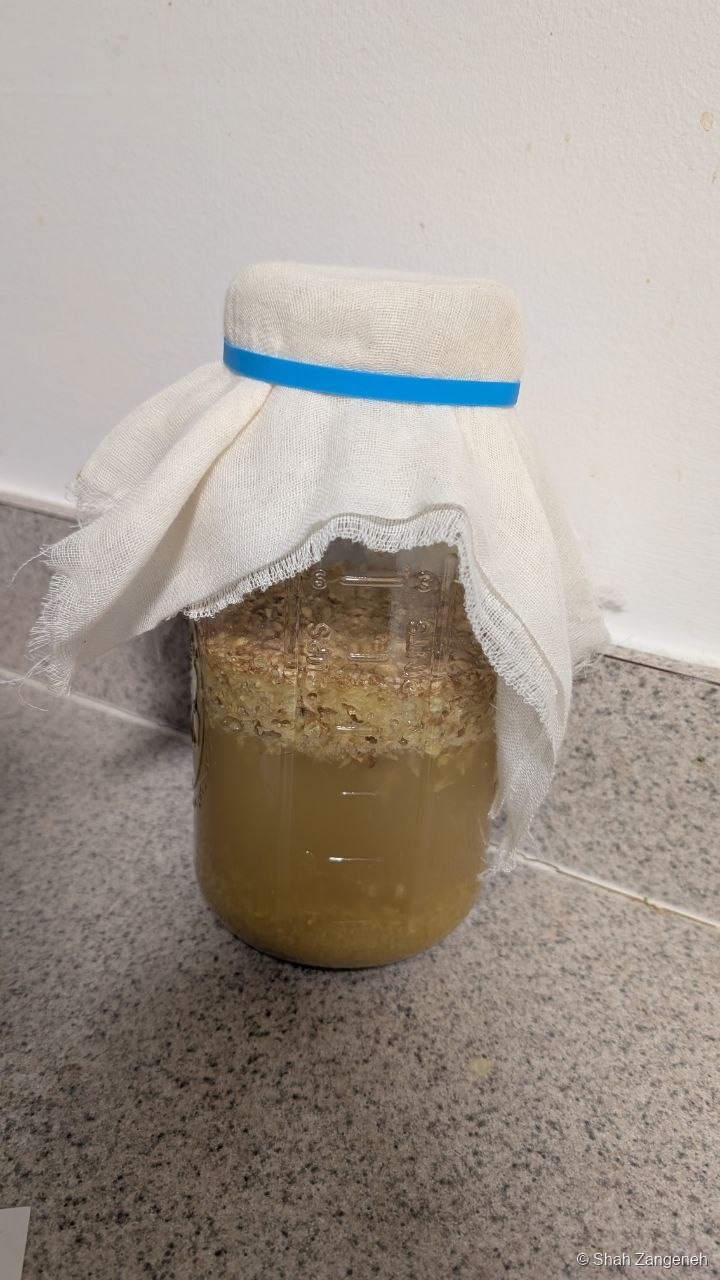
In December 2019 I was in the courtyard of the Victoria and Albert Museum in London, eating a pain au chocolat I’d smuggled out of the breakfast buffet, drinking a can of Cawston Press ginger beer. I posted about it and asked the obvious question: do we have this in the US? It’s delicious.
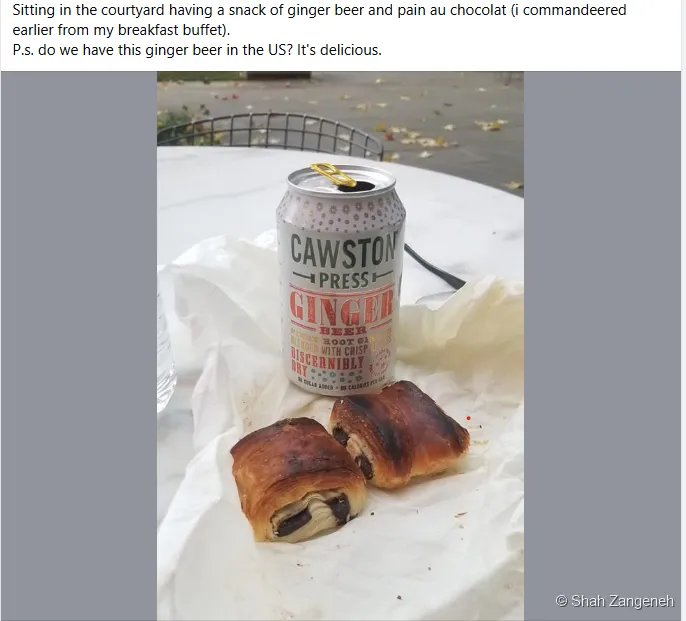
A friend set me straight in the comments: yes, actually, you can find it in some US stores, and order it on Amazon. I did, the week I got back, and kept a case around for a while after that.
That should have been the end of it. But six years on, now that I’ve actually figured out brewing kombucha, it’s hard to leave a drink alone just because you can already buy it. Once you start asking how fermentation works, you start asking it about everything.
Why brew it myself
The question that got me started wasn’t where to buy Cawston. It was whether ginger beer self-carbonates the same way kombucha does, or whether the fizz just gets forced in at a factory.
Mostly it’s the second one. Most supermarket ginger beer is ginger-flavored syrup, carbonated at bottling, with no fermentation anywhere near it. The brands that actually brew theirs (Reed’s, the better Fever-Tree lines) exist, and they’re not cheap.
Cawston itself isn’t one of them. It isn’t fermented at all. A UK ingredients listing has it as pressed apple juice (45%), sparkling water, ginger extract, capsicum extract, and ascorbic acid. So what I was actually chasing was a little backwards: take a drink that gets its character from juice and added carbonation, and build a real, fermented version that lands in the same place anyway.
The mechanism for that is a ginger bug: wild yeast and bacteria grown from grated ginger, sugar, and water, the fermenting cousin of a kombucha SCOBY. The bug does the work, and the carbonation happens sealed in the bottle, same as a kombucha second ferment. I already had that part figured out from kombucha: swing-top bottles, a closet that sits around 72-73°F. Organic ginger runs about $5 a pound, and a batch uses well under that, so cost was never really the point. Making my own naturally carbonated ginger beer was.
The ginger bug
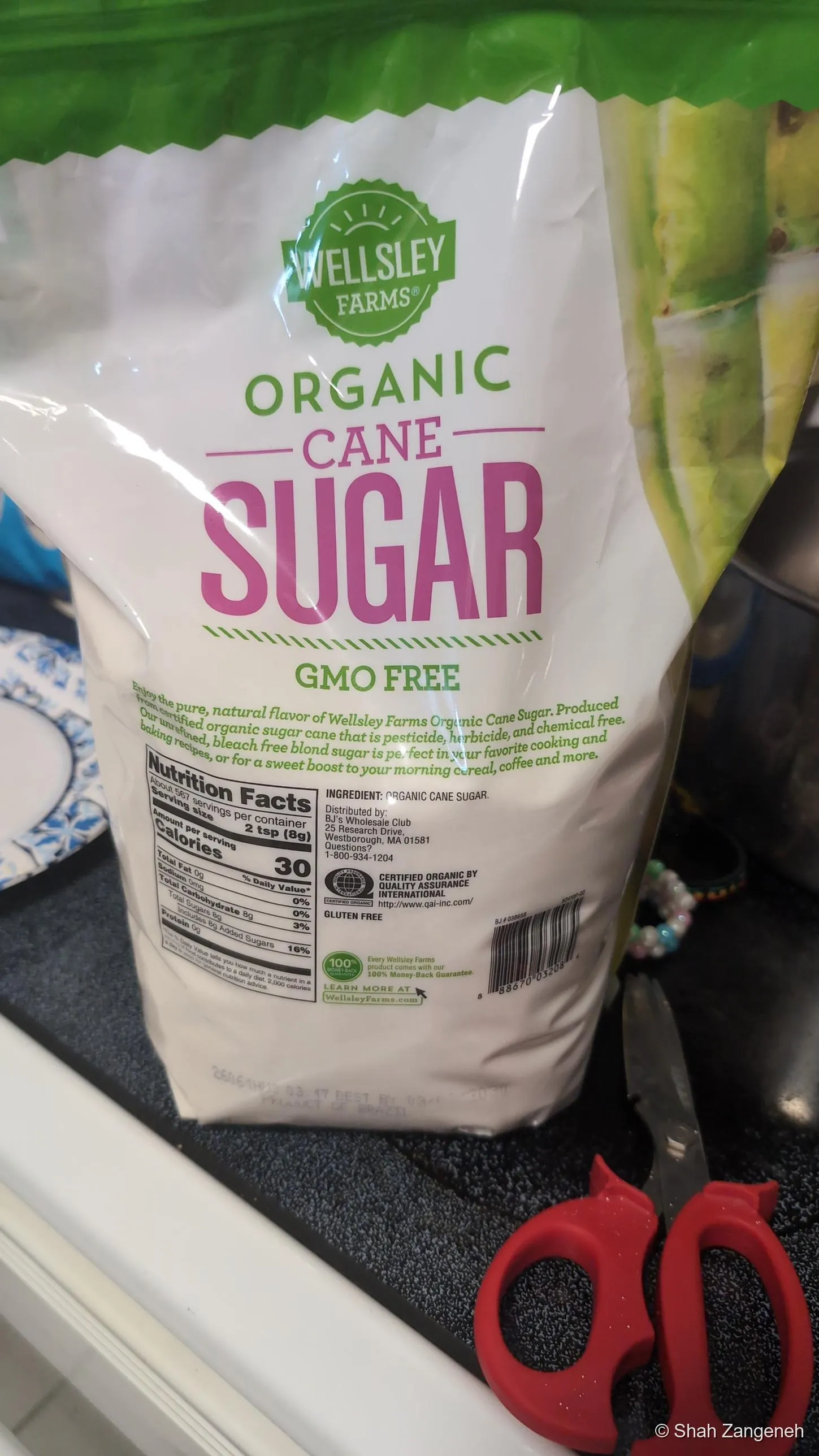
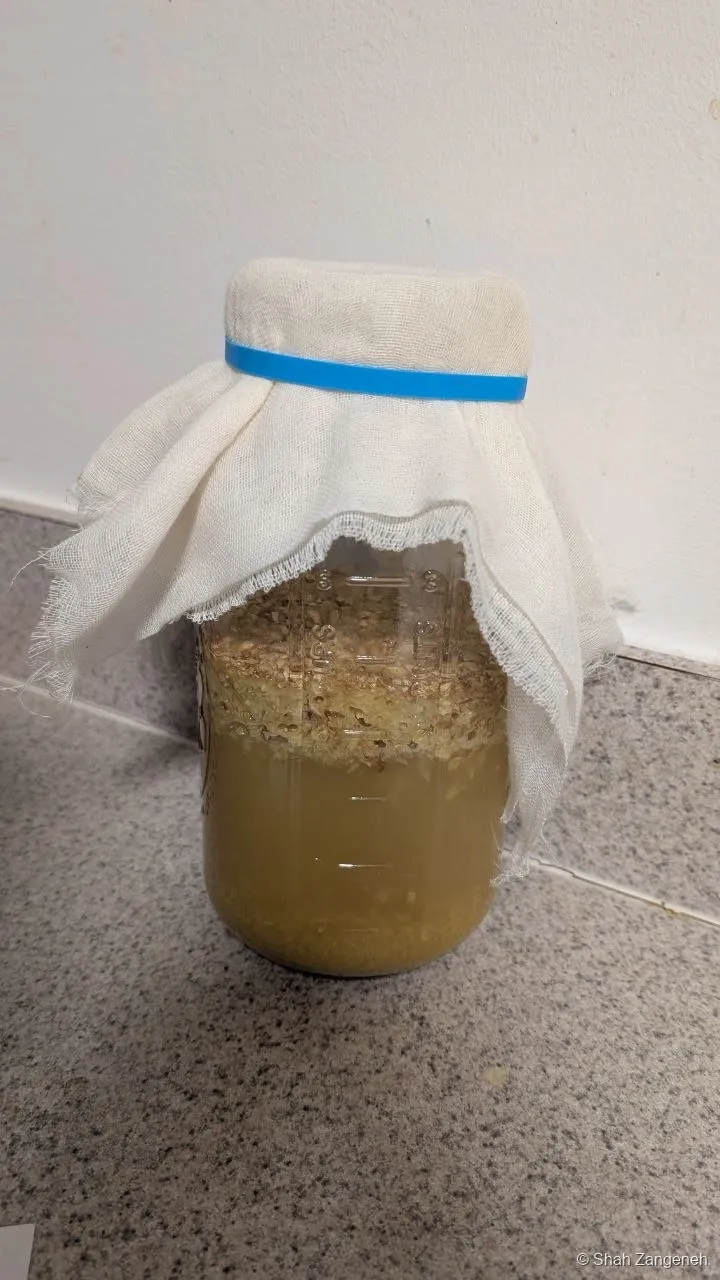
Day 0: a 1-liter jar, 480 g non-chlorinated water, 24 g grated ginger (skin on, since the wild yeast lives on the skin), and 50 g organic cane sugar. Covered with cheesecloth and a rubber band, not a lid.
After that, every day: 12 g grated ginger and 24 g sugar, stirred in. The bug kept its own schedule: tiny bubbles by day 1, audible fizz by day 2, a ring of foam at the edge by day 4, and by day 5, bubbles all through the middle when stirred, plus a sweet, floral smell. That’s the signal it’s ready.
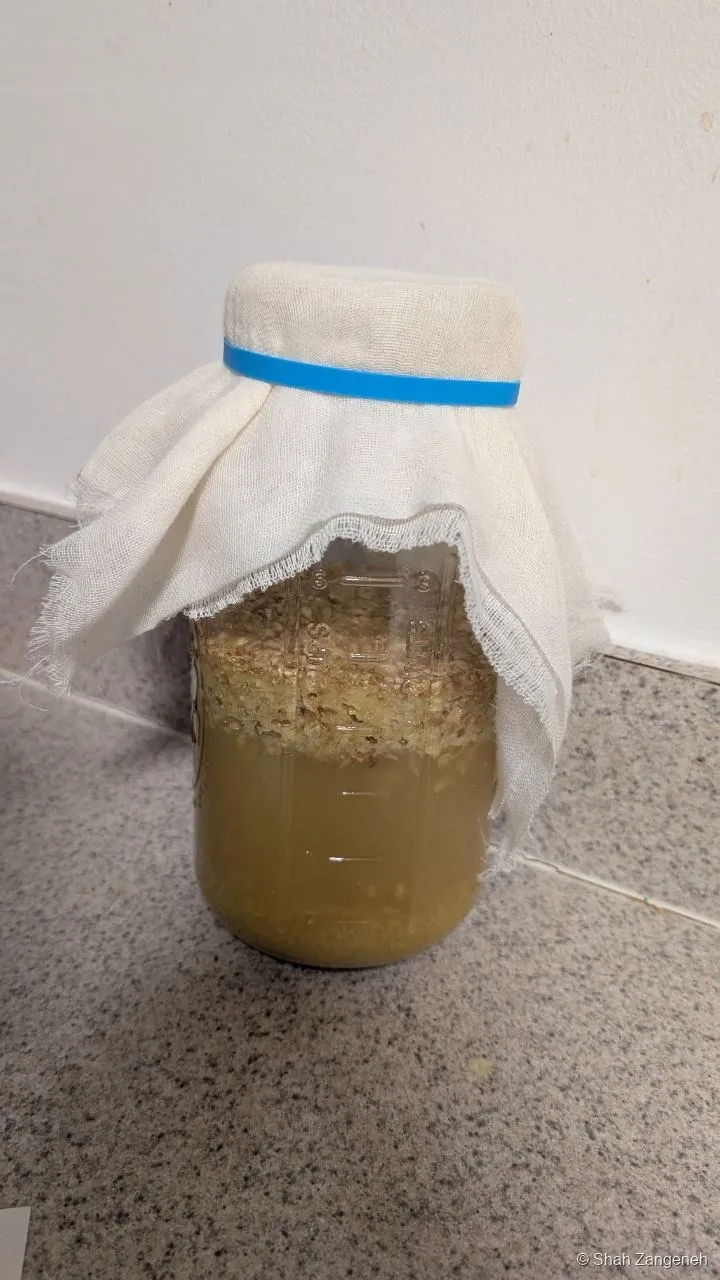
Lessons that stuck: grate a fresh portion each day instead of pre-portioning a stash, and stir before feeding so you can feel for fizz. When I take starter liquid for a batch, I strain out however much clear liquid I need, no pulp, replace it with the same weight of water, and go back to the normal daily feeding. Nothing fancier than that.
Batch one
First batch: a cooked ginger tea base, sugar dissolved in while it was still hot, cooled below 85°F so it wouldn’t kill the bug, then bug liquid and bottled lime juice stirred in once everything was cold.
It came out drinkable. The ginger flavor was good. The lime was not. Bottled lime juice carries a synthetic edge that never really blended in. I drank the whole batch anyway, partly because a fermented ginger drink is probably doing something decent for your gut even when you don’t love the garnish, and partly because dumping a full batch of working ferment felt worse than just finishing it.
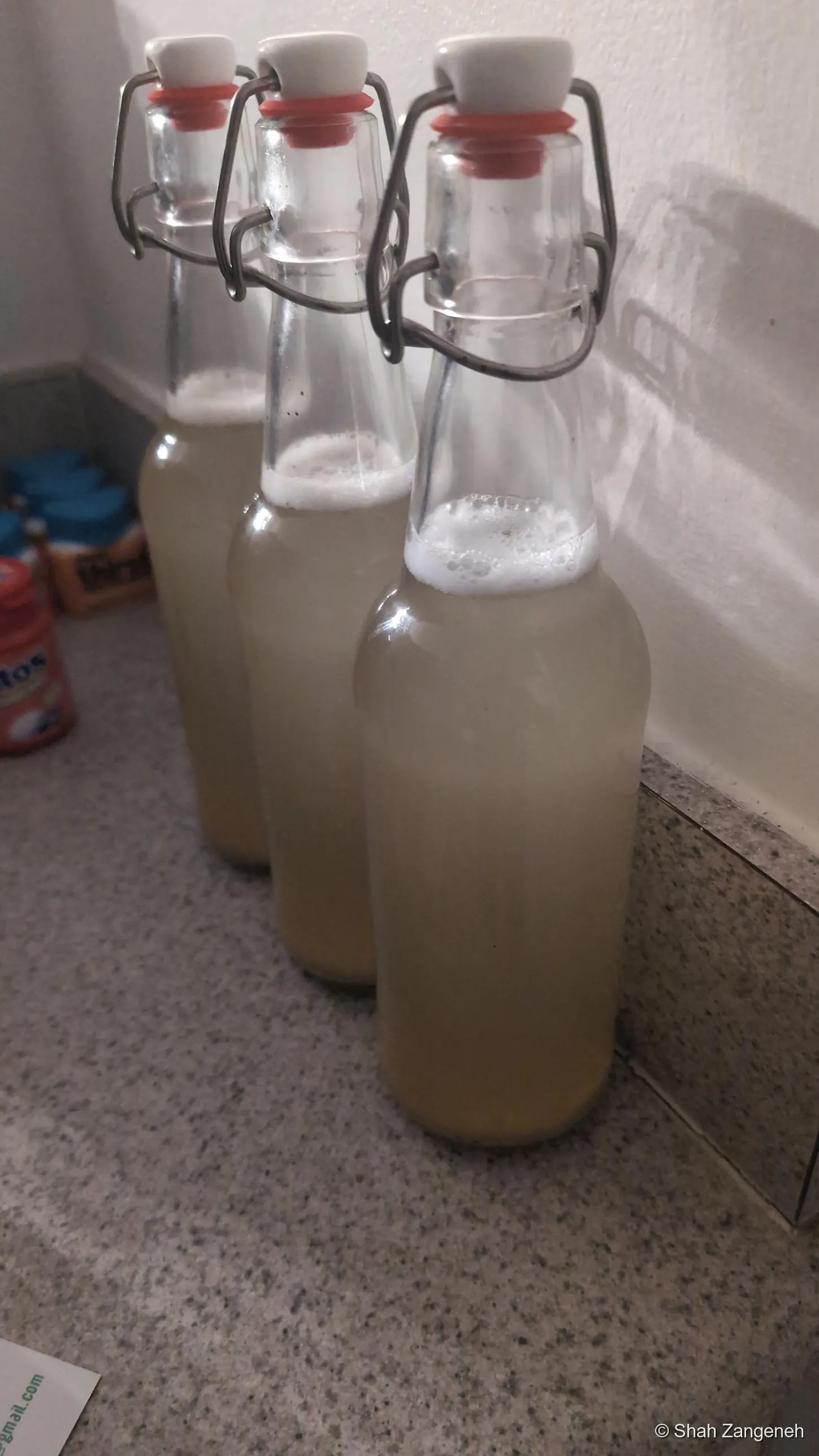
Two things I took from it: dial back the sugar, and leave the bottled citrus out entirely.
The bug goes quiet
A couple of weeks in, enough pulp had built up in the jar that I strained it out completely to clean things up. After that, the foam and the raft just stopped forming, even on the normal feeding schedule. I tried juicing the ginger instead of grating it. Not the fix.
Around then I also stirred in a couple of tablespoons of old fridge kombucha, thinking it might jump-start things. Instead the jar turned vinegary and sat bubble-free for days. A small test, just jar liquid and a little sugar in a sealed bottle, showed nothing, and for a bit I figured the bug was actually dead.
It wasn’t. A couple of days later it had a defined raft back, a flowery smell, and plenty of bubbles. The real lesson was in how I’d cleaned the jar: stripping out all the pulp had stripped out most of the yeast too, since that’s where most of it actually lives, not in the clear liquid. These days, when I do a full cleanup, I leave about half the pulp behind, and the raft comes back without any fuss.
The plastic bottle trick
Somewhere around here I started using a single plastic soda bottle as a pressure gauge, alongside the glass. Squeeze it: once it’s rock hard, everything in that batch goes in the fridge.
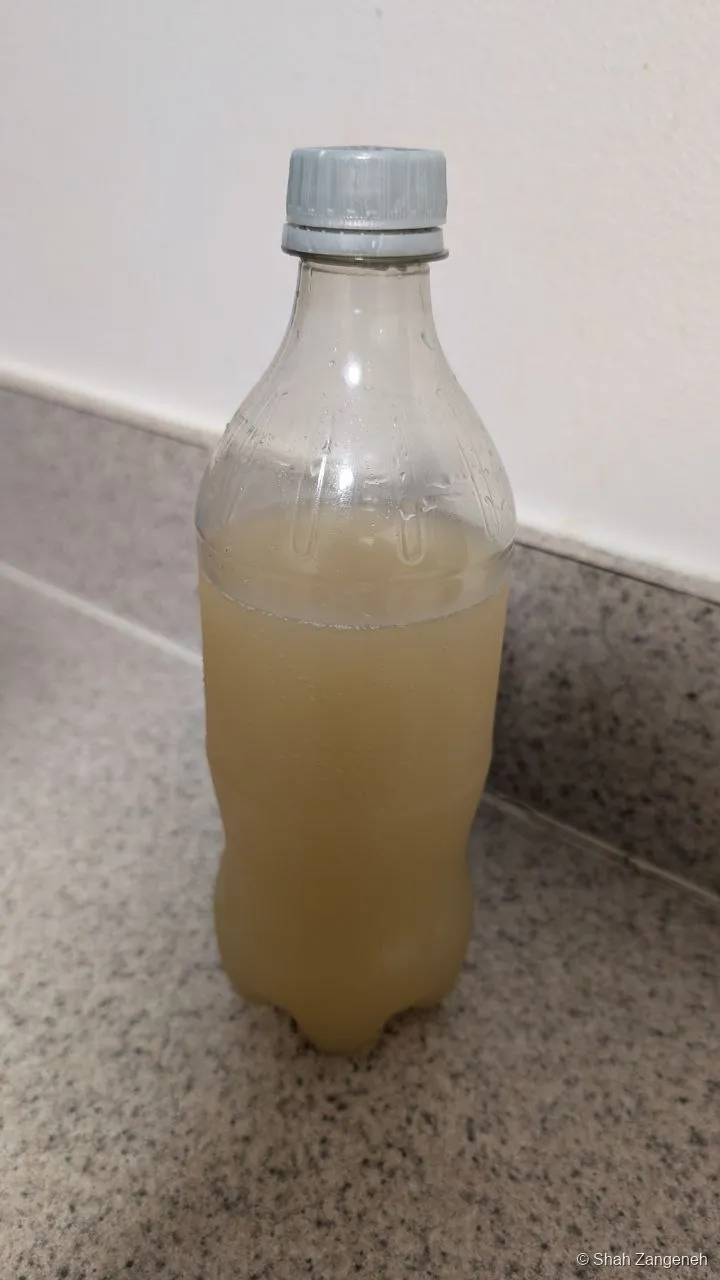
A small batch run this way, chilled with a small squeeze of fresh lime, came out good, if a little strong and spicy on the ginger. That’s where the real lime lesson landed: bottled lime concentrate tastes cooked no matter what you do with it. Fresh lime belongs at serving time, not in the ferment, since the aromatics that make it worth adding don’t survive fermentation anyway.
It also left me with two ideas for later: a pinch of cayenne per bottle, since Cawston itself uses capsicum extract for its bite, and maybe a Celestial Seasonings Cranberry Vanilla Wonderland tea in the mix, which I remembered as cinnamon-heavy from kombucha experiments.
The apple batch
A few weeks in, I had the piece I’d been missing: carbonation only needs about 10-15 g of sugar per liter, and apple juice already carries way more fermentable sugar than that on its own. No added sugar needed. The apple does double duty as flavor and fuel.
For the juice, I wanted something unfiltered and without preservatives, since a preservative is exactly the kind of thing that can stall a live culture. I thought about juicing fresh apples myself too, but raw apple juice carries its own bacteria risk, and pasteurizing it at home means getting it to around 160°F, which defeats the point of doing it myself. Store-bought was the actual answer: Lakewood Organic Pure Apple, unfiltered, not from concentrate, pasteurized like any other juice that sits on a shelf instead of in a fridge case.
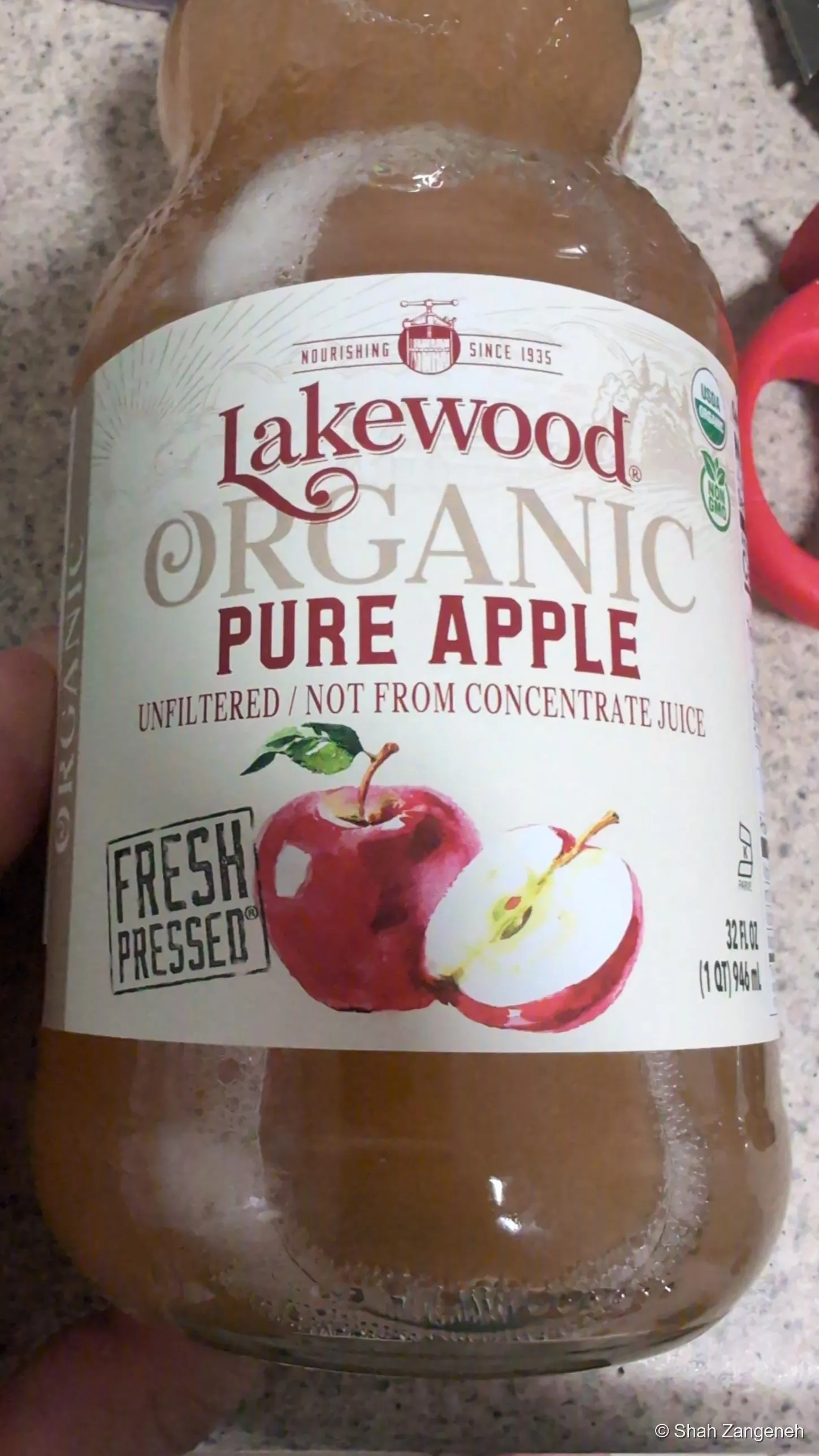
I skipped a small test batch this time. The full recipe needed almost the entire bottle of apple juice, and buying a second bottle just to run a test felt like a waste. I went straight for the real batch: apple juice at 45%, matching Cawston’s own ratio, plus ginger juice, bug liquid, cold water, and a pinch of cayenne, enough to fill a 64 oz growler plus the gauge bottle for monitoring.
One thing happened on the way in that I noticed and let ride anyway: I strained the whole mix through cheesecloth right before bottling, and most of the cayenne stayed behind with the solids. I could have stirred more back in. I didn’t, mostly out of curiosity about how it would turn out without it.
The verdict
This one worked. Nicely fizzy, refreshing, sweet, with just the right amount of heat. If straining knocked most of the cayenne out, whatever made it through landed in exactly the right spot, because the heat tastes natural and sits well against the apple and ginger instead of fighting them.
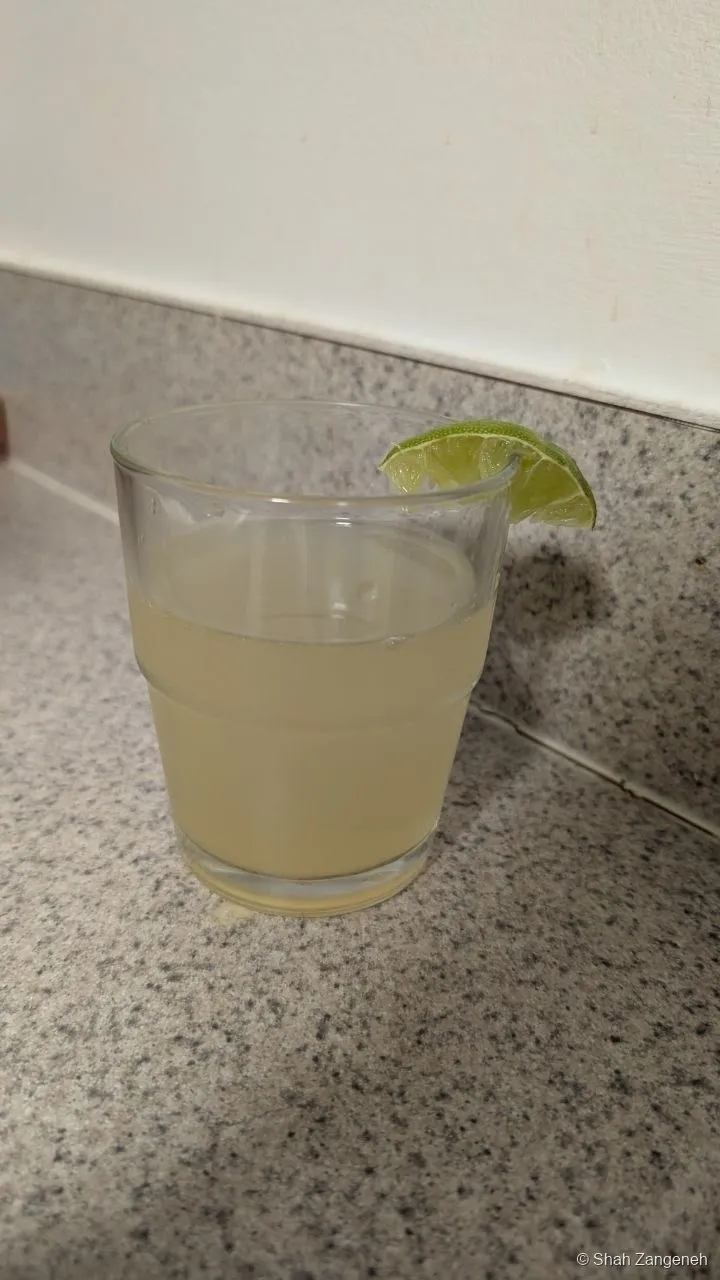
I poured a glass to photograph for this post, added that squeeze of fresh lime (the lesson from batch one, finally applied correctly), and then just drank it. Close to Cawston. With the lime, honestly better. Don’t overdo it, though; too much lime takes over the aftertaste.
Batch one got finished too, synthetic lime and all. I haven’t tried the Cranberry Vanilla Wonderland tea yet. I’m having too much fun with the apple version to mess with it, but it’s still on the list.
I can still order a case of real Cawston on Amazon any time I want. I checked the glass I just poured against that memory from London, and I like mine better anyway.